Worship

“Speak to one another with psalms, hymns and spiritual songs. Sing and make music in your heart to the Lord, always giving thanks to God the Father for everything” (Ephesians 5:19,20).

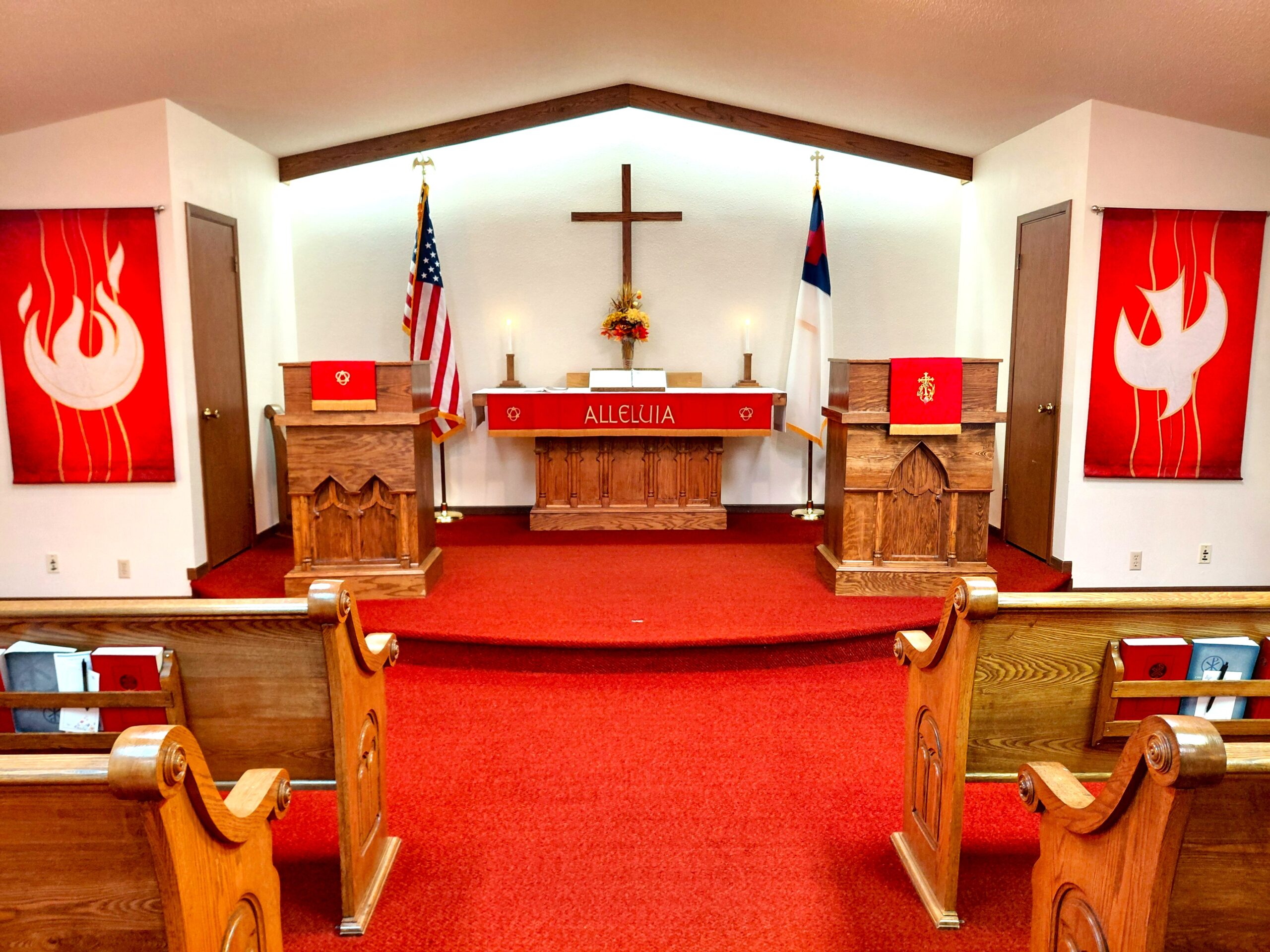
The central activity of worship glorifies God and strengthens his people. Worship is the heart of all parish life, the time when the greatest number of members gathers to proclaim the gospel and receive God’s life-giving power in Word and sacrament.

Lutheran sermons are based on the Bible and accurately adhere to the teachings Scripture.

Watch and reflect on our Sermons here!

About Us

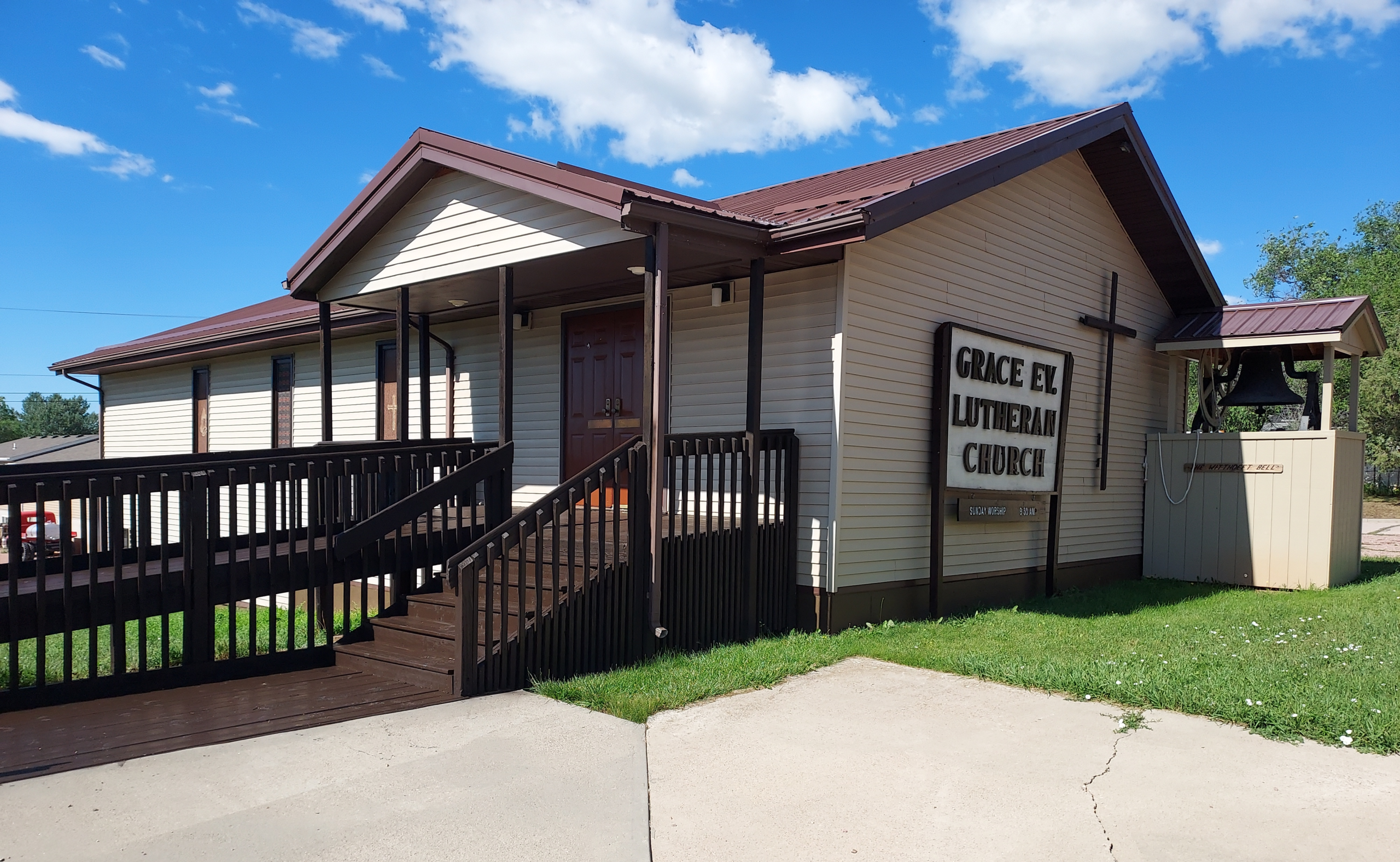
Serving families in Fall River and Custer Counties since 1978, Grace Ev. Lutheran Church continues to welcome all those who seek to understand biblical Christianity and walk with us in the unity of faith.

Our Approach

We believe it’s important to let the Bible speak to people in the clear and understandable way in which God wrote it!

 • We believe you want to hear what the   Bible says and not what we think.

 • Our goal is to let the Bible speak for itself and we’re committed to help people see how it does just that.

 • Our promise to you is that we will preach and teach in a way that meets this goal to help you grow in your knowledge and love for God and for others.

“Everyone Is Welcome! Join us for an abundance of Grace found in God’s Word!”

Our Purpose

In grateful response to God’s grace and empowered by the Holy Spirit, the mission of Grace Evangelical Lutheran Church is to extend the reach of our God-given mission of proclaiming the gospel in Word and sacrament to our community, and our world.

Christ’s Love, Our Calling!

The Bible, Baptism, & Communion

Select each topic to learn more.

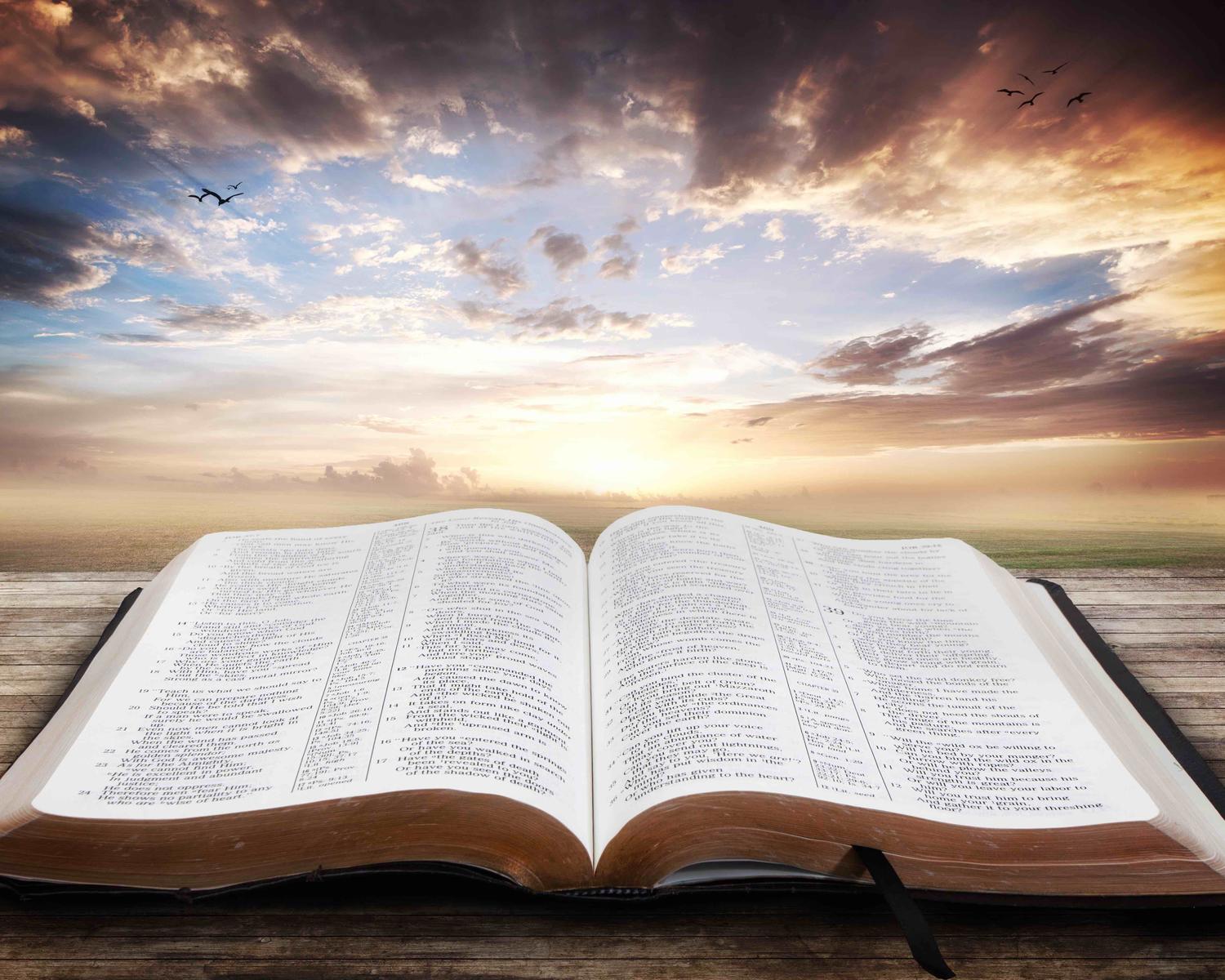
The Bible is the true Word of God. It is inspired by the Holy Spirit. This means that God breathed into the writers the exact thoughts and words they were to write. As a result every statement in the Bible is the truth. One part of the Bible explains another part. It is the only guideline for the faith and life of Christians. We are to read and study it diligently. It clearly teaches all we need to know in order to obtain our eternal salvation.

God bestows all spiritual blessings upon sinners by special means established by Him. These are the “means of grace”, the gospel in Word and sacraments. A sacrament is a “sacred act” established by Christ in which the Word connected with an earthly element gives the forgiveness of sins.

A sacrament is a sacred act established by Christ that uses earthly elements, like water (Baptism), bread, and wine (Communion), along with God’s Word, to convey spiritual blessings, such as forgiveness of sins. We recognize two main sacraments: Baptism and the Lord’s Supper.

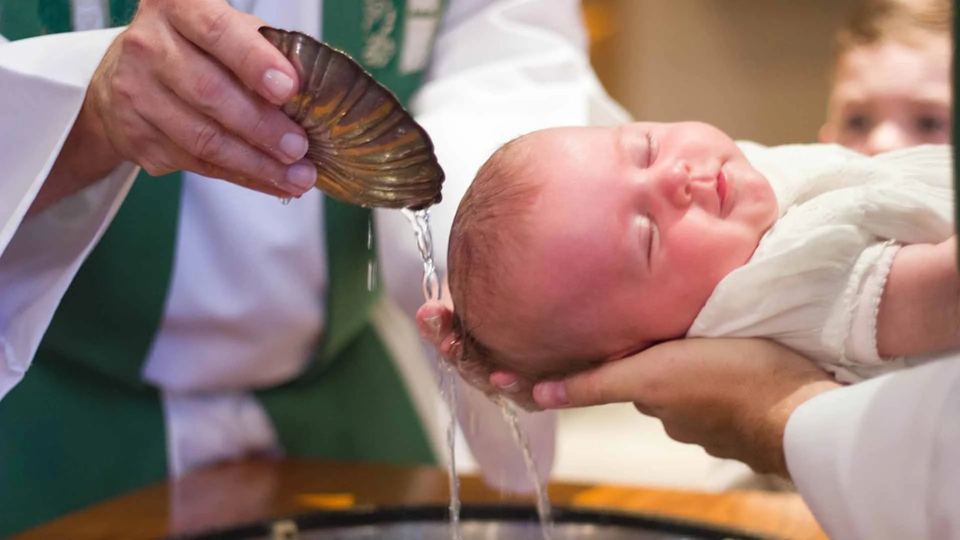
Through Baptism the Holy Spirit applies the gospel to sinners, giving them new life (Titus 3:5) and cleansing them from all sin (Acts 2:38). Jesus points to the blessing of Baptism promising, “Whoever believes and is baptized will be saved” (Mark 16:16). The blessing of Baptism is meant for all people (Matthew 28:19), including infants. Infants are born sinful (John 3:6) and therefore need to be born again, that is, to be brought to faith, through Baptism (John 3:5).

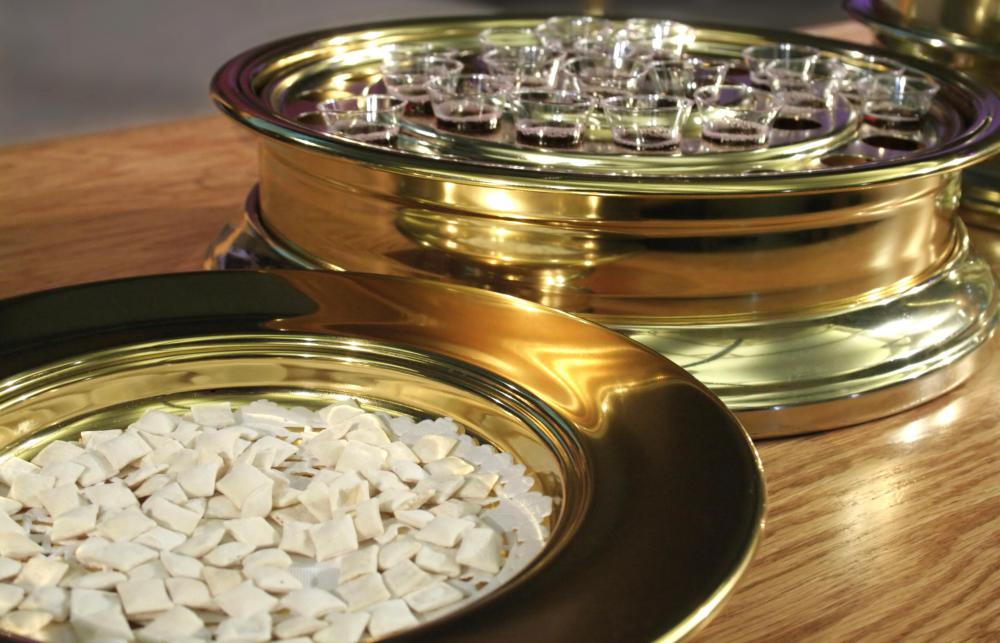
Communion: All who join in the Lord’s Supper receive the true body and blood of Christ in, with, and under the bread and wine (1 Corinthians 10:16). Jesus said, “This is my body. This is my blood of the covenant, which is poured out for many for the forgiveness of sins” (Matthew 26:26,28). We believe that Christ’s words cause the real presence—they are not a human action. As we receive Jesus’ body and blood, we also receive the forgiveness of sins (Matthew 26:28) and the comforting assurance that we are truly his own. Unbelievers also receive Christ’s body and blood, but to their judgment (1 Corinthians 11:29).

Confessional Lutherans believe that Holy Communion is a sacred act established by Christ, in which believers receive Jesus’ true body and blood in with and under bread and wine. Through this holy meal, Jesus grants forgiveness, strengthens faith, and offers eternal salvation to those who believe. Only those who repent of their sins and have received proper Christian instruction should participate, as taught in Matthew 26:26-28; 1 Corinthians 10:16; 1 Corinthians 11:27,28; and 1 Corinthians 10:17.

Participation in Holy Communion is reserved for those who are in spiritual unity and doctrinal agreement with biblical teachings and who have publicly declared this agreement. This practice, originating in the early Christian church, is not a judgment on anyone’s faith. Rather it emphasizes carefulness regarding such a sacred matter. Guests who are not members of Grace Ev. Lutheran Church, WELS, or ELS are encouraged to speak with the pastor before communing.

We Believe

As a synod* we believe that the Bible is God’s Word, that it is completely true, it is fully inspired by God, it is the final authority in all matters of faith and teaching, and it is without error.

The three ecumenical creeds, the primary statements of belief for historic Christianity, summarize our faith. In addition, we wholeheartedly subscribe to the Lutheran Confessions (contained in the Book of Concord of 1580) because they are correct explanations of biblical truth.

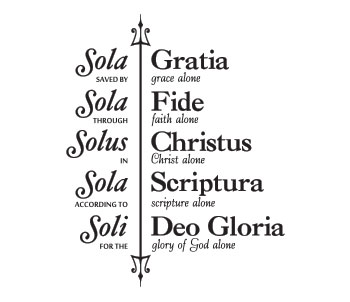
In essence, the Bible, the creeds, and the Lutheran Confessions all speak the same truth… We are declared to be righteous before God by his Grace alone, through Faith alone, in Jesus Christ alone!

* Synod means “walking together” in faith and practice.

Our Affiliation

Our church is part of a group of churches called Wisconsin Evangelical Lutheran Synod or WELS.

The WELS is a worldwide church with congregations in all fifty states and Canada. It also serves sixteen foreign countries through world mission work.

WELS is a member of the Confessional Evangelical Lutheran Conference (CELC) a worldwide fellowship of Lutheran church bodies, committed to the teachings of the Book of Concord of 1580.

Learn more about the Wisconsin Evangelical Lutheran Synod here!

How to get in touch with us

Author: magefaller

  • The Gospel Lesson

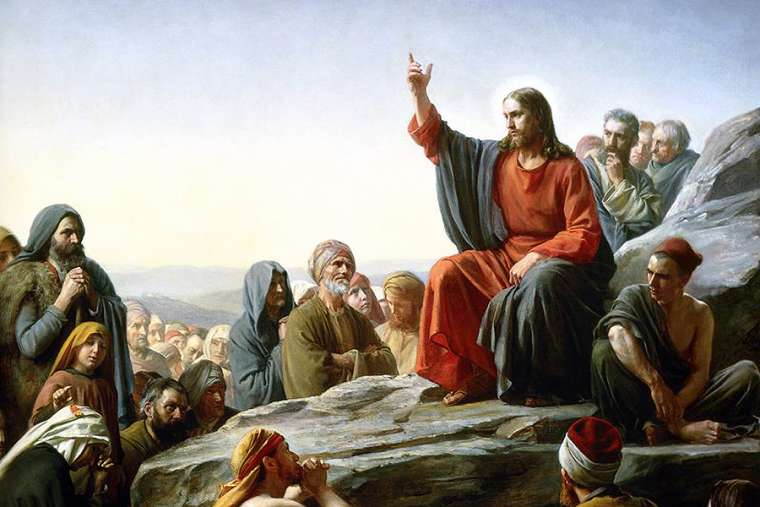
    Think back to the warm, tender confidence stirred in your heart as you hear the account of Jesus’ birth on Christmas Eve! Remember the joy of trumpets and choirs proclaiming the good news of his resurrection! Through the Gospel, the Holy Spirit draws our eyes to Jesus Christ—our Redeemer, our risen Savior, and our gracious Lord.

    In keeping with historic Christian worship, confessional Lutheran churches commonly hear three Scripture lessons in the Divine Service (wherein Christ serves us through His Word and Sacraments). These readings give worshipers a balanced exposure to God’s Word and help the congregation hear the message of Scripture throughout the church year.

    After the Old Testament and Epistle lessons, the Verse of the Day—often framed by alleluias—turns our attention toward the words and works of Christ in the Gospel lesson. When the Gospel is announced, the congregation traditionally sings, “Glory be to You, O Lord,” an exclamation of praise as our Lord Jesus comes to us in his Word.

    Many of these readings are arranged in a three-year lectionary (from the Latin lectionarium, “a book of lessons”), with each year giving special attention to one of the synoptic Gospels: Matthew, Mark, or Luke.

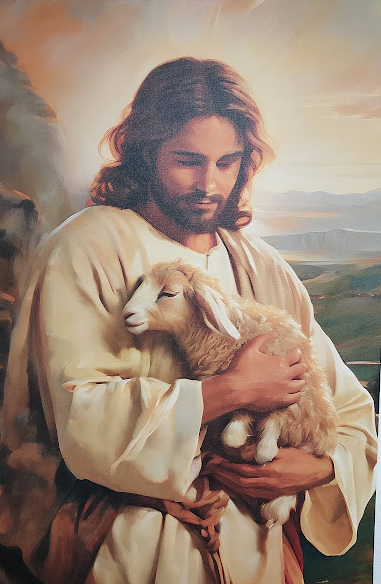
    Out of reverence for Christ and His Gospel, we often stand to hear the Gospel lesson. This posture is not commanded by God, but in Christian freedom we gladly use it to confess that Jesus’ words and works stand at the center of our faith! By faith we recognize the voice of our Good Shepherd, focus our attention, and receive His saving message with joy!

  • Living As Christians Live in Two Kingdoms

    As Christians, we may wonder how our faith fits with life in the world around us. Scripture gives us a comforting way to think about this. God rules all things! He does so in more than one way. Through the “civil realm,” God preserves order, protects life, and provides a measure of justice through lawful authorities. Through the “spiritual realm,” God brings sinners to faith and keeps them in Christ through the means of grace—the gospel in Word and Sacrament.

    We can be thankful for the blessings God gives through government, courts, laws, and public service. These gifts help restrain evil, protect our neighbors, and provide daily peace and order. We may rightly honor lawful authority and serve our community as faithful citizens.

    And we remember that no earthly authority can do what only Christ can do! The civil realm may preserve order, but it cannot forgive sins. Laws may protect life, but they cannot create faith. Saving grace comes through Christ alone, through Word and Sacraments.

    This keeps the church’s calling clear and precious! The church does not rule by force or place its hope in political power. Christ gives His church a far greater treasure: “the ministry of His Word!” Through that Word, the church calls sinners to repentance, announces forgiveness in Jesus’ name, and comforts troubled hearts with the promises of the gospel.

    And where God’s Word speaks clearly, the church teaches what God says about truth, justice, human dignity, and love for our neighbor. But carefully, remembering that the gospel is not a political program. Our confidence is never in earthly power, but in “Christ crucified and risen for sinners!”

    This helps us see our daily callings with fresh joy! God serves us through parents and children, workers and employers, teachers and students, voters and public servants, not to earn God’s favor—for Christ has already won our salvation—but as meaningful ways God allows us to love and serve each other.

    On this 250th anniversary of the signing of the Declaration of Independence, we give thanks for the good order God provides in the civil realm. We serve our neighbors in love wherever God has placed us. And above all, we rejoice that our forgiveness, life, and salvation rest in Jesus Christ alone!

  • Festival of the Holy Trinity

    The Festival of Holy Trinity, or Trinity Sunday, is observed on the first Sunday after Pentecost, at the close of the Easter season. It celebrates the Christian doctrine of one God in three persons: Father, Son, and Holy Spirit.

    The doctrine of the Trinity was formally articulated in the early centuries of Christianity, especially at the First Council of Nicaea in 325 AD. The Nicene Creed affirmed the co-equal and co-eternal nature of the Father, Son, and Holy Spirit (Gen. 1:26; Isa. 6:8; Ps. 110:1; Mt. 28:19; Mk. 1:10–11; Jn. 1:1–2 etc.).

    The Holy Trinity is a biblical teaching upheld by the church fathers and woven into Christian worship from the earliest centuries. Over time, it has remained central to Lutheran worship and the life of the Church.

    Trinity Sunday affirms and celebrates the mystery of the Triune God, emphasizing the relationship of the three persons and their work in salvation. Its readings, hymns, and prayers focus on the unity and diversity of God’s nature.

    Worship on Trinity Sunday often includes the Athanasian Creed, which clearly confesses the Trinity and the dual nature of Christ as fully God and fully man. In many Confessional Lutheran congregations, its use reinforces the Christian Church’s doctrinal foundation.

    Trinity Sunday invites worshippers to reflect on the nature of God and the significance of the Trinity in Christian faith through reverent and meaningful worship.

  • Festival of the Holy Trinity and the Athanasian Creed

    The Festival of Holy Trinity, or Trinity Sunday, is observed on the first Sunday after Pentecost, at the close of the Easter season. It celebrates the Christian doctrine of one God in three persons: Father, Son, and Holy Spirit.

    Historically the Holy Christian Church is a creedal church. The Christian church is creedal because creeds summarize apostolic faith, preserve doctrinal unity, guard against error, and connect believers across time and place. Confessing creeds in worship publicly affirms shared belief, catechizes new members, shapes prayer and preaching, and embodies the church’s participation in the historic faith. It’s an expression of love for God, and a reminder of God’s love for us.

    The doctrine of the Trinity was formally articulated in the early centuries of Christianity, especially at the First Council of Nicaea in 325 AD. The Nicene Creed affirmed the co-equal and co-eternal nature of the Father, Son, and Holy Spirit (Gen. 1:26; Isa. 6:8; Ps. 110:1; Mt. 28:19; Mk. 1:10–11; Jn. 1:1–2 etc.).

    The Holy Trinity is a biblical teaching upheld by the church fathers and woven into Christian worship from the earliest centuries. Over time, it has remained central to Lutheran worship and the life of the Church.

    Trinity Sunday affirms and celebrates the mystery of the Triune God, emphasizing the relationship of the three persons and their work in salvation. Its readings, hymns, and prayers focus on the unity and diversity of God’s nature.

    Worship on Trinity Sunday often includes the Athanasian Creed, which clearly confesses the Trinity and the dual nature of Christ as fully God and fully man. In many Confessional Lutheran congregations, its use reinforces the Christian Church’s doctrinal foundation.

    Trinity Sunday invites worshippers to reflect on the nature of God and the significance of the Trinity in Christian faith through reverent and meaningful worship.

    The creed most associated with Trinity Sunday is named after St. Athanasius, a staunch defender of the Christian faith in the fourth century. It was prepared to assist the Church in combating two errors that undermined Bible teaching. One error denied that God’s Son and the Holy Spirit are of one being or Godhead with the Father. The other error denied that Jesus Christ is true God and true man in one person. The Athanasian Creed continues to serve the Christian Church as a standard of the truth. It declares that whoever rejects the doctrine of the Trinity and the doctrine of Christ is without the saving faith.

  • The Festival of Pentecost

    Pentecost

    The Festival of Pentecost, an important celebration in the Christian liturgical calendar. Pentecost occurs 50 days after Easter Sunday and commemorates the descent of the Holy Spirit upon the apostles and 120 other disciples, as described in Acts 2.

    The Old Testament refers to Pentecost as Shavuot, translated as the “Festival of Weeks,” which commemorates the first fruits of the spring grain harvest. This festival is the second of three principal Jewish national celebrations mandated by the Law of Moses (Ex.34:22; Dt. 16:16).

    Attendance was required for Jewish men. Shavuot occurs on the fiftieth day, precisely seven weeks following Passover. The word “Pentecost” is derived from the Greek meaning “fiftieth.”

    After Jesus had risen, He spent 40 days with His apostles. Once, when He was eating with them, He commanded them, “Do not depart from Jerusalem, but wait for what the Father promised, which you heard from me. For John baptized with water, but you will be baptized with the Holy Spirit not many days from now.” (Acts 1:3-5)

    Ten days after the ascension of Jesus into heaven—fifty days following Easter Sunday—the Holy Spirit descended upon those Christians gathered in Jerusalem (Acts 2). This event, accompanied by the sound of wind and tongues of fire, empowered these timid believers to boldly proclaim the gospel. Visitors attending the festival from various regions around the Mediterranean heard the gospel in their own native languages.

    The Birth of the Christian Church

    Pentecost marks a pivotal moment in history: the beginning of the Christian Church. On this day, 3,000 individuals responded to the apostles’ message and joined the community of believers (Acts 2:41). Every follower of Christ receives the Holy Spirit, which empowers us to serve, and enables us to fulfill Jesus’ commission to spread the Gospel (Mt. 28:19-20). This year Pentecost will be celebrated on May 24th.

  • Thoughts on Motherhood

    “Love is patient and kind; love does not envy or boast; it is not arrogant or rude. It does not insist on its own way; it is not irritable or resentful; it does not rejoice at wrongdoing, but rejoices with the truth. Love bears all things, believes all things, hopes all things, endures all things. Love never ends.” (1 Cor. 13:4-8a ESV)

    The month of May brings to mind thoughts of our mothers and the celebration of Mother’s Day. For most mothers, motherhood is filled with positive memories, such as the joy experienced at their child’s birth and their children’s thoughtfulness.

    Despite the many joys of motherhood, mothers also recognize that life is not without its challenges. Living in a sinful world means that the relationship between mother and child is affected by sin. Children can have outbursts, be defiant, and at times show disrespect.

    Paul’s second letter to Timothy (2 Tim. 1:5) provides insight into the actions of one believing mother and grandmother. Eunice and Lois, though only briefly mentioned, are recognized as faithful and believing women. They understood the reality of sin, the power of grace, and the good news of Jesus, their Savior from sin.

    Timothy, Eunice, and Lois were God’s forgiven children. This mother and grandmother shared Jesus’ forgiving love, which inspired Timothy to share that same love.

    Through trust in Jesus, we are all children of our heavenly Father. That’s why it is both a privilege and a joy for every Christian mother to teach her children about the love of Jesus. If you were blessed with a Christian mother, remember her with gratitude. If you are a mother, pray that God will bless both you and your children. Let us also remember to pray for Christian mothers everywhere!

    Hymn CW 449 Children of the Heavenly Father

    1. Children of the heav’nly Father, Safely in his bosom gather; Nestling bird or star in heaven Such a refuge ne’er was given.
    2. God his own doth tend and nourish; In his holy courts they flourish. From all evil things he spares them; In his mighty arms he bears them. 

    Prayer

    Gracious Heavenly Father, we thank You for the gift of mothers — for their love, patience, and tireless care. Bless them with strength for each day, wisdom in their guidance, and joy in the fruits of their labor. Comfort those who miss their mothers, those who long to be mothers, and those whose relationships are strained. Let every mother find her hope and peace in Your Son, Jesus Christ, whose love never fails. In Jesus’ name we pray, Amen.

  • Easter: Origins and Significance

    “The angel said to the women, “Do not be afraid! I know that you are looking for Jesus, who was crucified. 6 He is not here. He has risen, just as he said. Come, see the place where the Lord lay. 7 Go quickly and tell his disciples, ‘He has risen from the dead!” (Mt. 28:5-7b)

    Easter is the oldest and most important festival in the Christian calendar. It commemorates the bodily resurrection of Jesus Christ, which is a central teaching of the Christian faith. The holiday marks the culmination of Holy Week underscoring the foundational role of the resurrection in Christianity.

    The origins of Easter trace back to the earliest Christian communities of the 1st century. Over time, a variety of traditions emerged as the festival was observed. Originally, Easter was celebrated around the same time each year, but because the resurrection of Jesus did not have a fixed calendar date, there was considerable variation in determining when Easter should occur.

    Easter became a moveable feast, celebrated on the first Sunday after the first full moon following the vernal equinox, which occurs around March 21. This method for calculating the date was formalized at the Council of Nicaea in 325 A.D., which marks its 1,700th anniversary this year.

    The timing of Easter is closely connected to the Jewish Passover, as both are determined by lunar cycles. The Council of Nicaea formalized the date for Easter to highlight the historical link between those Old Testament Christians who anticipated the coming of Christ and those New Testament Christians who still reflect on His incarnation, death, and resurrection even today.

    By standardizing the date of Easter, the Holy Christian Church promoted a unified celebration among Christians across the Roman Empire—a practice that continues in dating Easter still today.

    Defining the date of Easter allowed the early church to emphasize its importance, solidify the teaching surrounding the resurrection, and reinforce the beliefs that serve as the foundation of authentic Christianity throughout the ages. He is risen!

  • Lent and Ash Wednesday

    After the early church determined how to calculate the date of Easter, on the Sunday following the first full moon after the vernal equinox. It was later agreed at the Council of Nicaea (A.D. 325) that Lent a 40-day fast, in imitation of Jesus Christ’s fast in the desert, would be encouraged in preparation for Easter.

    In A.D. 601, the 40-days of fasting were joined to six Sundays to be counted as feast days—when fasting does not apply—for a total of 46 days. At the same time, to begin the penitential season of Lent, the foreheads of Christians were marked with ashes in the shape of a cross, emphasizing the importance of repentance and the grace of God

  • Festivals and Seasons of the Church Year

    “Let us not neglect meeting together, as some have the habit of doing. Rather, let us encourage each other, and all the more as you see the Day approaching.” (Hebrews 10:25). 

    God directs us to gather as Christians and worship Him. In Old Testament times God spelled out the weekly day of worship —the Sabbath on Saturday—as well as three major annual festivals: Passover, Pentecost, and Tabernacles. These were required observances given to Israel. But, as New Testament Christians, we’re no longer bound by the ceremonial laws of the Old testament (Gal. 4:9-11; Col. 2:16-17).

    With the freedom we have in Christ, early Christians determined festivals and seasons that shape the Church Year. The Church Year helps focus our worship on the central events of our faith and the work of Christ for our salvation!

    As Christians, during the Church Year, we are presented with opportunities to attend special worship services in addition to our regular Sunday gatherings. These occasions can sometimes feel demanding or pull us in different directions.

    Our “sinful nature” resists anything that is good or godly, and it naturally wants nothing to do with either regular or special worship services. Yet, at the same time, our “new self” in Christ is moved by faith and echoes the sentiments of King David.

  • The Kyrie: Lord Have Mercy

    When your car breaks down you want help. Perhaps your insurance offers roadside assistance.  That service is available only to members. But solving life’s larger concerns isn’t that simple.  And when Gid seems far away, roadside assistance is not enough.

    The “Kyrie” is typically situated at the beginning of the service, often after the confession and absolution. This positioning underscores the importance of divine mercy before engaging in the worship of God.

    The name comes from the Greek words “Kyrie eleison,” meaning “Lord, have mercy.”  It expresses our acknowledgment that all people are sinful and in need for God’s mercy and forgiveness in a world filled with sin and suffering.

    From the earliest times, the Christian liturgy has included this heartfelt plea for God’s mercy, which frames Christ-centered worship. Recalling Christ’s redemptive work, it reminds us that worship is not a “heartfelt response” to God’s grace!

    Overall, the Kyrie Eleison enriches our worship experience by inviting us to humbly seek God’s mercy, and our reliance on God’s grace throughout life’s challenges.