


The Season After Pentecost
The “Season After Pentecost” begins the second half of the Church Year. Jesus promised to send another advocate to represent God to the world: the Holy Spirit. Where the Word is proclaimed, there you will find the Holy Spirit’s presence and blessing.
The Church Year is divided into two. In the first half, we focused on the life of Christ. Now, in this second half, we focus on the teachings of Christ. A life focused on all the right things is only possible because our Savior is always focused on us. Still today, through his Word, Jesus grants gifts to his disciples.
The first Sunday in the second half of the Church Year is named Holy Trinity. God is the first and most important focus of our attention. We cannot understand all there is to know about God. God’s very existence is a mystery, far beyond our ability to comprehend. Yet there is plenty about God’s majesty that we can understand!
We can understand that God provides for us as a loving Father as He has proven in the sacrifice of God the Son. We can understand that every time we gather in the name of our Triune God, the Holy Spirit grants us the greatest of blessings. These truths are worthy of our undivided attention!
What is a Synod?
The word “synod” comes from the Greek σύνοδος meaning “walking together” on a shared path of unity in doctrine and practice. It signifies a group of congregations that work together for the common purpose of promoting the Gospel and supporting one another in ministry. The concept of unity in a synod is mirrored in Acts 15 at the “Jerusalem Council.”
In Acts 15, Christian leaders met to address doctrinal concerns regarding Gentile converts to Christianity. From the earliest centuries, church communities adopted similar assemblies to preserve unity and safeguard Christian teaching. Over the centuries, Christians have continued the practice of synods exhibiting continuity from apostolic times.
The Communion of Saints
There is only “one holy Christian and apostolic Church,” the assembly of all believers in Christ, in all times and in all places. This “invisible church” is called the Communion of Saints, or the assembly of all true believers in Christ all over the world. This invisible church will continue until the end of time.
God’s kingdom here on earth is a kingdom of grace; a kingdom in which forgiveness of sins, holiness and righteousness are offered as a gift for Jesus’ sake to every repenting sinner. Membership in the kingdom of God is a matter of the spirit, the heart, and soul.
We also recognize the “visible church”, meaning all those in the world who profess the Christian faith in the Triune God and God’s Word and sacraments. In this visible church there are many shades and degrees of faithfulness, as well as hypocrisy and unbelief (Mt. 28:19; 1 Jn. 2;23; 1 Cor. 3,11).
The church exists on the foundation of Jesus Christ and the apostles – God’s true Word and Sacraments (Eph. 2:20). For the whole Bible is the Word of God and not a matter of personal interpretation(2 Tim. 3:16; 2 Pt. 1:20).
One Truth
As a synod (a body of believers walking together in teaching and practice) we do not formulate doctrinal declarations (statements of biblical teaching) on a regular basis. We believe that the Bible is the final authority in all matters of doctrine, that it is fully inspired by God and without error.
The three ecumenical creeds (Apostles, Nicene, and Athanasian), the primary creedal statements of historic Christianity, summarize well our faith. In addition, we wholeheartedly subscribe to the Lutheran Confessions (contained in the Book of Concord of 1580) because they are correct expositions of biblical truth.
In essence, the Bible, the creeds, and the Lutheran Confessions all speak the same truth: we are declared to be right with God by his grace alone through faith in Jesus!
Prayer and Praise
The power of music is great … but not greater than God’s Word. Yet, as Luther understood, when the two are combined our emotions and our intellect serve our God in worship.
Music has power. That’s why we ensure worshipful melodies, Scripture, and Christ-centered words are combined to express our thankfulness, love, and praise to God. Lutheran hymns are rich with meaning, serving as a source of comfort and hope.
Our hymns are not just words. They are a way of expressing faith and community, through music that evokes deep emotions and spiritual connection. So, our worship uses music to lift its prayers to the God of heaven.
And prayer goes beyond ordinary speech, employing music and poetry to more fully express our heart-felt desires. Yes, music helps us both praise God and call on him to help us!
Psalms, Hymns, and Spiritual Songs
“Let the word of Christ dwell in you richly, as you teach and admonish one another with all wisdom, singing psalms, hymns, and spiritual songs, with gratitude in your hearts to God.” (Col. 3:16)
Psalms, hymns, and spiritual songs have been sung by the Christian Church from its beginning (Eph. 5:19; Col 3:16). More commonly, in public worship, beginning in the 2nd century AD. One such hymn is “Shepherd of Tender Youth” ascribed to Clement of Alexandria (c. AD 170).
In the 2nd and 3rd centuries, false prophets began to use hymns to spread Gnosticism (a fusion of religious beliefs and cultures having occult lore, magic watchwords, and secret names). To counteract these heresies, many Christian leaders began to write hymns emphasizing objectivity and pure Christian worship.
In the Western Church, from the 4th century to the Reformation, Christian hymnists produced such hymns as “The Star Proclaims the King Is Here,” “The Royal Banners Forward Go,” and “A Hymn of Glory Let Us Sing.”
During the Middle Ages, hymns in the language of the people were occasionally in use as early as the 12th century. But it was Dr. Martin Luther who, during the Reformation, brought congregational singing into the common language for its full development. His emphasis on the spiritual priesthood of all believers (1 Pt. 2:9) created a need for hymn texts and tunes for congregational singing. Lutheran hymnals were first published in 1524.
As confessional Lutherans, we value hymns as a means of expressing and reinforcing biblical beliefs. They encapsulate key teachings and scriptural truths for everyone. A musical confession of faith, they connect us to the Christian Church in all ages.
A vital part of worship, psalms, hymns, and spiritual songs teach the Bible, foster unity, and enrich our spiritual experience. New hymns and hymn tunes continue to emphasize our Christian faith and belief. They stand the test of time.
A.D. 1517, The Reformation of the Church
On October 31, 1517, Martin Luther took a bold step that would forever change the course of church history. He famously nailed his 95 Theses to the door of the Castle Church in Wittenberg, Germany. This public act was a direct challenge to the established church practices of his day. Luther’s primary criticism centered on the sale of indulgences—certificates that were believed to reduce punishment for sins in “purgatory.” These indulgences distorted true Christian teaching and undermined the biblical understanding of forgiveness.
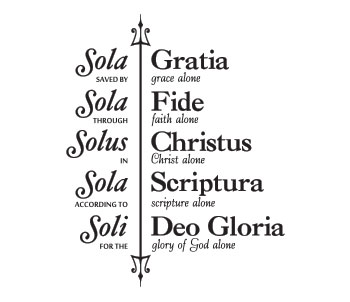
Luther’s protest was rooted in his conviction that Scripture alone holds absolute authority for Christians. He firmly rejected the supremacy of papal authority and church tradition, especially when these sources conflicted with one another or with the Bible itself. According to Luther, the teaching of salvation is clear: it comes by grace alone through faith alone as a gift from Christ alone. Salvation cannot be earned by good works, nor can it be bought; it is solely a result of God’s mercy and Christ’s redemptive work.
In unity with the earliest Christians, Luther and his followers held that the Scriptures are divinely inspired, “God-breathed,” and serve as the authoritative guide for faith and daily living. As expressed in the words of Scripture itself: “All Scripture is God breathed and is useful for teaching, for rebuking, for correcting, and for training in righteousness, so that the man of God may be complete, well equipped for every good work” (2 Tim. 3:16-17; cf. 2 Pet. 1:20-21). This understanding of the Bible as the foundation for doctrine and life was central to the Lutheran Reformation.
One of the most significant outcomes of the Reformation was the creation of the Luther Bible. Martin Luther’s translation of the Scriptures into the German vernacular represented the first major effort to make the Bible accessible to ordinary people. By providing the Word of God in the language spoken by the people, Luther ensured that everyone—not just the clergy or scholars—could read and understand the teachings of Scripture for themselves.
Reverence in the Church
In the name of Jesus, consider something profound: Where “reverence” is lost in the Church, something else always hurries in to fill the vacuum!
But what fills the vacuum? These days, reverence in the church is replaced by a soft, sentimental, and emotion-driven superficial spirituality. Let me explain.
In many places attendees are no longer reverent before a holy God. They bend before a “tame deity” who exists to validate their personal feelings. When doctrine (Latin: teaching) is abandoned and truth becomes “negotiable,” a pietistic emotionalism fills the vacuum — it substitutes passion for precision, mood for message, and sincerity for substance.
Before he understood the Gospel, Martin Luther saw God as primarily a harsh master holding the whip of judgment. His was a fear rooted in terror (legalism) … not in trust! It was only after the Gospel dawned in his heart that he could see God’s friendly face. God’s friendly face invites His people to approach Him in reverence and love.
Some have redefined God as soft and agreeable … not a lion but a lapdog. So, instead of proclaiming from the altar: “This is what the Lord says…”, they say from a music stand, “I feel like God might be saying…”. Without reverence, pastors lose their backbone and become wet noodles. Why?
Only because of confidence in Christ can our pastors proclaim the gospel boldly! They believe it is essential to confess the truth of God’s Word, the foundation for their faith and teachings, and which is outlined in the Book of Concord. This commitment to biblical truth empowers them to reject errors and stand firm in their beliefs, ensuring they faithfully share the message of salvation through Jesus Christ.
Without confidence in Christ and His Word, reverence is lost. Doctrine becomes divisive. Worship becomes entertaining. God becomes a pal. Christ becomes a homeboy. The altar becomes a stage. Sermons become motivational talk. Churches become event centers. Sacred space is lost.
Yet in our confessional Lutheran Churches, reverence remains. Scripture is authoritative. Christ is all in all! Therefore, you may take comfort that you are: Baptized! Forgiven! Fed at His altar! Hear His Word!
Through it all, God has turned your fear into faith!
Reverence in the Church
In the name of Jesus, consider something profound: Where “reverence” is lost in the Church, something else always hurries in to fill the vacuum!
But what fills the vacuum? These days, reverence in the church is replaced by a soft, sentimental, and emotion-driven superficial spirituality. Let me explain.
In many places attendees are no longer reverent before a holy God. They bend before a “tame deity” who exists to validate their personal feelings. When doctrine (Latin: teaching) is abandoned and truth becomes “negotiable,” a pietistic emotionalism fills the vacuum — it substitutes passion for precision, mood for message, and sincerity for substance.
Before he understood the Gospel, Martin Luther saw God as primarily a harsh master holding the whip of judgment. His was a fear rooted in terror (legalism) … not in trust! It was only after the Gospel dawned in his heart that he could see God’s friendly face. God’s friendly face invites His people to approach Him in reverence and love.
Some have redefined God as soft and agreeable … not a lion but a lapdog. So, instead of proclaiming from the altar: “This is what the Lord says…”, they say from a music stand, “I feel like God might be saying…”. Without reverence, pastors lose their backbone and become wet noodles. Why?
Only because of confidence in Christ can our pastors proclaim the gospel boldly! They believe it is essential to confess the truth of God’s Word, the foundation for their faith and teachings, and which is outlined in the Book of Concord. This commitment to biblical truth empowers them to reject errors and stand firm in their beliefs, ensuring they faithfully share the message of salvation through Jesus Christ.
Without confidence in Christ and His Word, reverence is lost. Doctrine becomes divisive. Worship becomes entertaining. God becomes a pal. Christ becomes a homeboy. The altar becomes a stage. Sermons become motivational talk. Churches become event centers. Sacred space is lost.
Yet in our confessional Lutheran Churches, reverence remains. Scripture is authoritative. Christ is all in all! Therefore, you may take comfort that you are: Baptized! Forgiven! Fed at His altar! Hear His Word!
Through it all, God has turned your fear into faith!
The Invocation: Entering God’s Presence
In confessional Lutheran worship, the invocation serves as a significant and sacred moment, marking the beginning of the service and inviting the congregation into the presence of God. Like a spiritual doorway, it calls us from the ordinary routines of daily life into the “sacred space” of worship, highlighting God’s promise to be present among us as we gather in His name.
And like a doorway, the invocation is an invite from God Himself, calling the congregation to enter God’s presence in a special way as we worship Him. It reminds us of His enduring faithfulness setting the tone for the service, encouraging us to approach God with reverence and respect, aware of His holiness.
When we hear the words of Christ, “In the name of the Father and of the Son and of the Holy Spirit” (Matthew 28:19), we’re reminded of our new birth of water and the Spirit, through which we’ve entered the kingdom of God (John 3:5). The invocation calls to mind the profound transformation in our lives as believers, and our entry into fellowship with God.
In some worship services, the invocation is drawn from 2 Corinthians 13:14, calling to mind the nature of the Holy Trinity and the relationship God has established with us. It highlights unity and love within the Triune God, and His grace extended to us through Christ.
The Amen that follows is an emphatic “Yes!” affirming the words of the invocation and publicly declaring our faith in God as Trinity!
The Incarnation of Jesus
As confessional Lutherans, we often focus on Jesus’ suffering, death, and resurrection for our justification. Yet, the Incarnation—the union of divine and human natures in Jesus—forms the foundation of our Christian faith. We celebrate this miracle at Christmas!
Christ’s Incarnation is essential for understanding the atonement. Christ’s humanity allowed Him to be the perfect sacrifice for the sins of the world, fulfilling the requirements of the law on behalf of all people. God ordained that Christ’s human nature fulfill His roles as our prophet, priest, and king. As both fully God and fully Man, He serves as the perfect Mediator enabling us to approach God with confidence.
Why did God become human? God became human to redeem humanity from sin, death, and the devil’s power and to grant us new life in Him. To truly understand the cross and the empty tomb, we must look back to the Annunciation and the Nativity. There our redemption is accomplished by One who was born to die, to rise, to ascend to the Father’s right hand, and to send the Holy Spirit to His Church.
Christ’s Incarnation anchors our faith and unlocks the mystery of the person and work of the Son of God. It’s the true source of comfort and hope for believers, reminding us that God is not only with us … but He is with us as one of us! Therefore, He does not hesitate to call us His family.
The Son of God, and Son of Mary, participates in our life, our trials, our suffering, and even our death through His Incarnation. In Christ, we see His love, mercy, and justice in action. Through the Incarnation, we gain a clearer understanding of what it means to be human, for Jesus exemplifies a sinless life in obedience to God … something only He could do.
In the Incarnation Christ shares our life, He invites us to share in His. This invitation forms the life of the Church—membership in the body of Christ. It underscores the sacraments, particularly the Lord’s Supper, where He is truly present making His grace and love tangible for believers.
Christmas is fundamentally about the Incarnation because it encapsulates God’s entry into human history in a personal and life-changing way. It is foundational to our Christian faith—for through the Incarnation salvation is made available to all!
Merry Christmas!
Confession & Absolution: The Rite of Preparation
Worship allows us to receive God’s grace through His Word and Sacraments. Confessional Lutherans value the historic Christ-centered liturgy that is founded on Scripture. The Rite of Confession and Absolution following the invocation prepares us to hear God’s Word and receive His Sacraments.
In this part of the liturgy, we acknowledge our sins and receive God’s forgiveness. The practice is rooted in Scripture, particularly in passages such as 1 John 1:9, and John 20:22-23 where Jesus empowers His disciples to forgive sins in His name.
We cannot hide from God. We know where we hurt, where we sin, and the part we’ve played in hurting others. Confession is acknowledging our failure to prioritize God and love others as we should. Although God already knows our sins, confession helps us recognize and admit them. We humbly seek God’s mercy. After confessing our sins, absolution—spoken by the pastor—assures us of the forgiveness attained for us by Christ Jesus. Absolution (to wash away) cleanses us of our sins giving spiritual comfort.
The Rite of Confession and Absolution remains an enduring and vital practice, offering forgiveness of sins, spiritual healing and growth. It reassures us of God’s continued grace and strengthens our trust in Him!
The Epiphany of Our Lord: Light for All Nations
“After they went into the house and saw the child with Mary, his mother, they bowed down and worshipped him. Then they opened their treasures and offered him gifts: gold, frankincense, and myrrh.” (Mt. 2:11 EHV)
Epiphany, celebrated on January 6th, marks the visit of the Magi to Jesus and is often called the Gentile’s Christmas. On this special day, the Christian Church commemorates and celebrates the visit of the Wise Men, or Magi, who humbly knelt before the Son of God. Epiphany is a reminder that Jesus was born as the Savior for all nations, shining the light of salvation throughout the world.
Matthew’s Gospel describes the realization of a prophecy spoken by Isaiah: “Nations will come to your light, and kings to the brightness of your dawn” (Isaiah 60:3). Jesus is revealed not only as the Savior for the Jewish people but, as both Isaiah and Matthew attest, as the Savior for everyone—for you and for me!
During this season of the Church Year, we travel with the Magi to behold the incarnate Son of God. Like them, we bow in reverence and worship the Savior of the World. And although they were not members of God’s Old Testament people, the Magi came as Gentiles—outsiders in many respects—from eastern lands. They came to worship the One who would bring light to a world shrouded in darkness.
Darkness describes humanity under the weight of sin. We all experience this darkness because we are all sinners. Yet, into this world of darkness, our Lord brings the light of salvation. God became flesh to be our Redeemer. Through His death on the cross, Jesus took away the sins that fill our lives—the anger, grudges, excuses, and guilt are all removed. In Christ, we receive forgiveness, life, and peace.
People seek peace in various areas of life, but Bethlehem offers lasting peace with God through Jesus. Like the Magi, we want to kneel and worship Jesus, our Savior. So, let us honor Christ by offering our best, for He has already given us His best—His forgiveness, His life, and the priceless gift of salvation!
The Kyrie: Lord Have Mercy
When your car breaks down you want help. Perhaps your insurance offers roadside assistance. That service is available only to members. But solving life’s larger concerns isn’t that simple. And when Gid seems far away, roadside assistance is not enough.
The “Kyrie” is typically situated at the beginning of the service, often after the confession and absolution. This positioning underscores the importance of divine mercy before engaging in the worship of God.
The name comes from the Greek words “Kyrie eleison,” meaning “Lord, have mercy.” It expresses our acknowledgment that all people are sinful and in need for God’s mercy and forgiveness in a world filled with sin and suffering.
From the earliest times, the Christian liturgy has included this heartfelt plea for God’s mercy, which frames Christ-centered worship. Recalling Christ’s redemptive work, it reminds us that worship is not a “heartfelt response” to God’s grace!
Overall, the Kyrie Eleison enriches our worship experience by inviting us to humbly seek God’s mercy, and our reliance on God’s grace throughout life’s challenges.
Festivals and Seasons of the Church Year
“Let us not neglect me0eting together, as some have the habit of doing. Rather, let us encourage each other, and all the more as you see the Day approaching.” (Hebrews 10:25).
God directs us to gather as Christians and worship Him. In Old Testament times God spelled out the weekly day of worship —the Sabbath on Saturday—as well as three major annual festivals: Passover, Pentecost, and Tabernacles. These were required observances given to Israel. But, as New Testament Christians, we’re no longer bound by the ceremonial laws of the Old testament (Gal. 4:9-11; Col. 2:16-17).
With the freedom we have in Christ, early Christians determined festivals and seasons that shape the Church Year. The Church Year helps focus our worship on the central events of our faith and the work of Christ for our salvation!
As Christians, during the Church Year, we are presented with opportunities to attend special worship services in addition to our regular Sunday gatherings. These occasions can sometimes feel demanding or pull us in different directions.
Our “sinful nature” resists anything that is good or godly, and it naturally wants nothing to do with either regular or special worship services. Yet, at the same time, our “new self” in Christ is moved by faith and echoes the sentiments of King David.
“I rejoiced with those who said to me, ‘Let us go to the house of the Lord.’” (Psalm 122:1).
Our “new self” has that joyful attitude concerning regular or special worship services and finds extra reasons to say: “I love the house where you live, O Lord, the place where your glory dwells” (Psalm 26:8).
Leave a Reply